STERIBAG, the autoclavable disposal bag
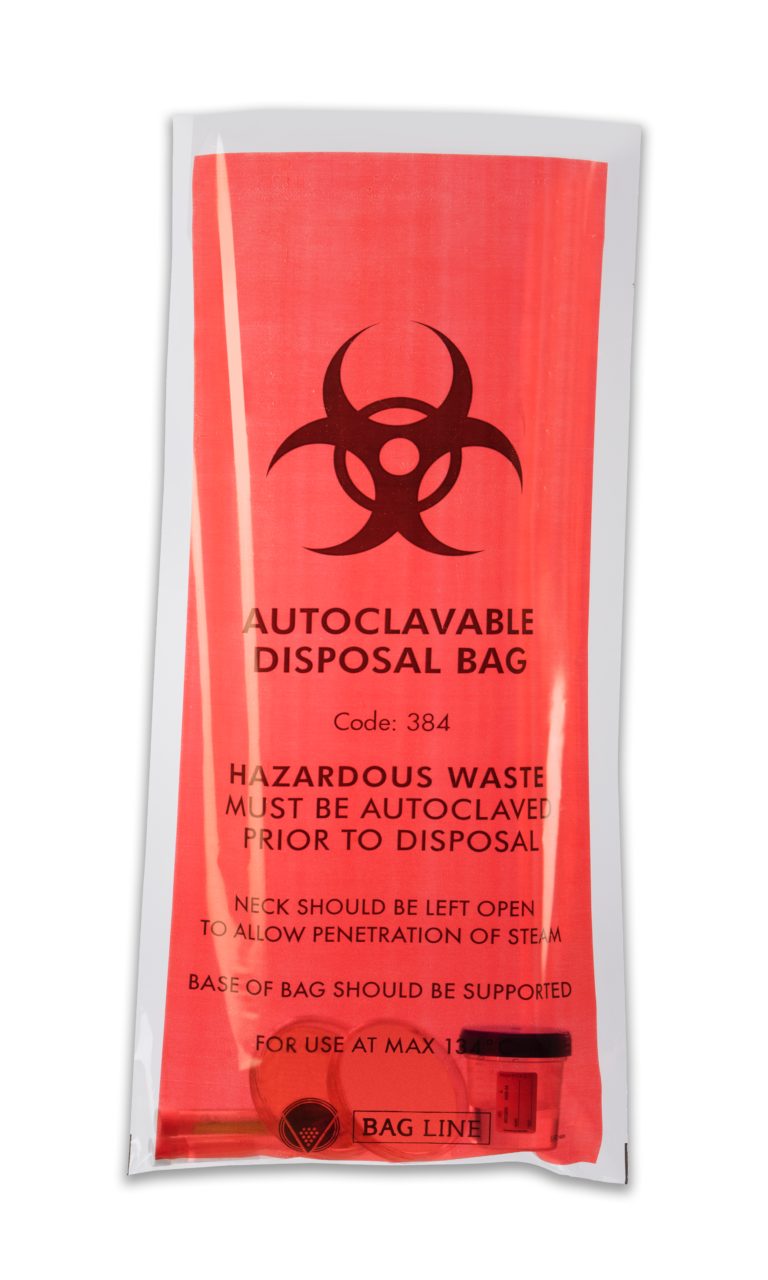
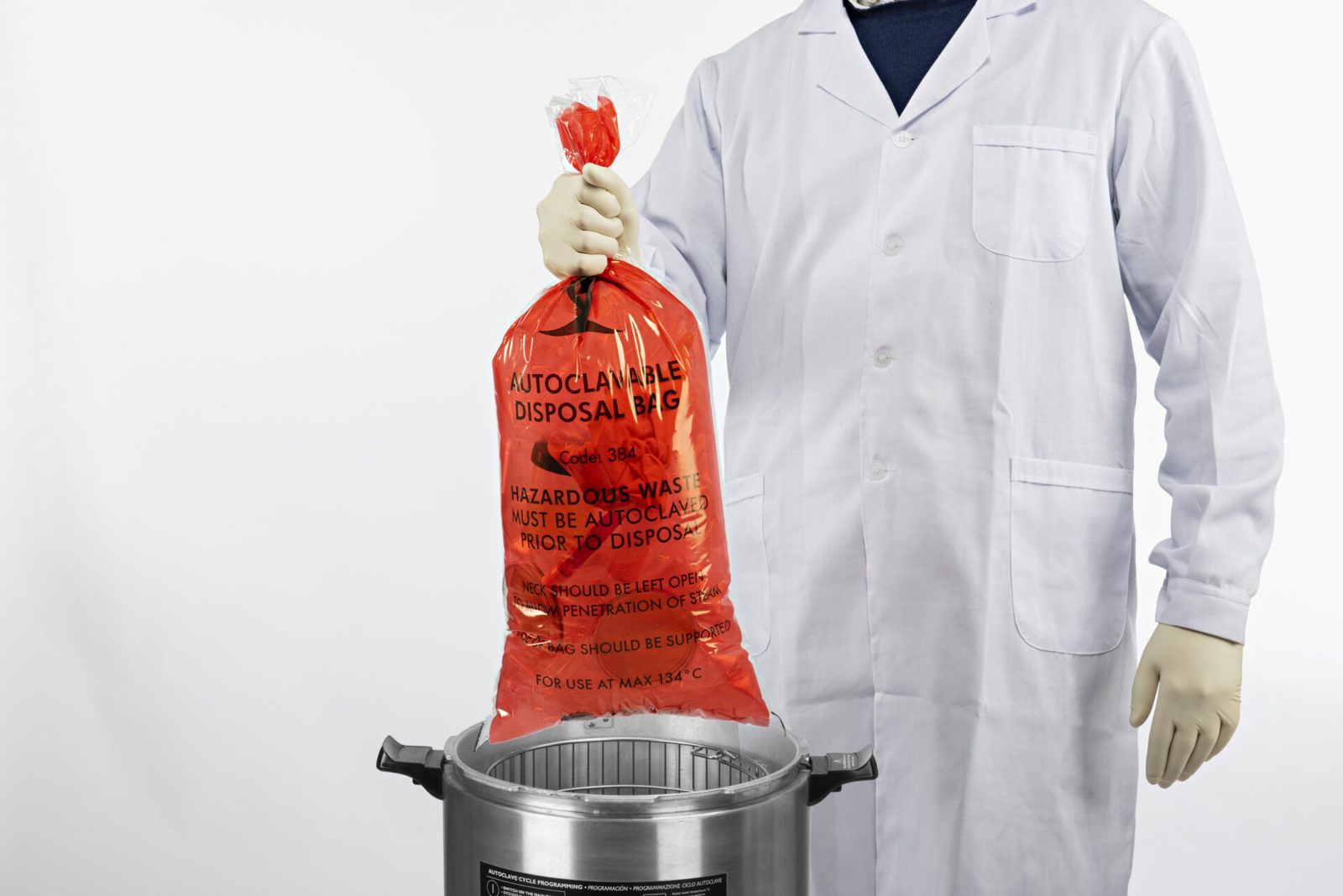
STERIBAG is the red BAG LINE bag for autoclaving contaminated items before disposal: Petri and contact plates, pipette tips, gloves, masks.
Features
- Also used to pack, sterilise or keep sterile non-plastic items.
- A biohazard symbol on each bag signals contaminated samples.
- Standard sterilisation cycle: 121 °C for 20 minutes, with the bag not fully closed.
- Made of polypropylene.
Code
384: polypropylene (PP) bags, 300 × 660 mm, 20 packs of 50 (1,000 pieces).
FAQ
- What are autoclavable bags for? Disposing of biohazard waste or autoclaving items such as animal cages, plates, membrane filters and pipettes safely.
- What are they made of? Polypropylene, which withstands the high temperature and pressure of the autoclave.
- What cannot be autoclaved? Items contaminated with solvents, volatile or corrosive chemicals, radioactive materials, carcinogens, mutagens or teratogens.
- Why 121 °C? High pressure is needed to reach temperatures that kill micro-organisms quickly. The most common are 121 °C and 132 °C, held for a minimum time.
- How does moist heat kill bacteria? By coagulating their proteins; it is much more effective than dry heat.
- Does autoclaving kill everything? A proper cycle inactivates spores, fungi, bacteria and viruses, but is not expected to eliminate all prions.
- How is autoclaved waste disposed of? Remove it as soon as the cycle ends, never leave it overnight, and take it to the biohazard waste area.
- How do you use the bag? Seal it properly and always wear gloves, apron, mask or eye protection.
Reference: WHO, health-care waste management manual.
The BAG LINE in 2023
- Nov 2022The BAG LINE
- Code 382SUPER BAG
- Code 408SFB SIDE FILTER BAG
- Code 384STERIBAG
- Code 386BIOHAZARD POCKET SUPER BAG
TRIO.BAS in 2023
- JanuaryVERITEST SYSTEM for flow-rate checks
- JanuaryThe P.A.C.A.S. protocol
- JanuaryApplication notes and SOPs for Annex 1
- FebruaryAGC, three tests with one instrument
- FebruaryAIRBIO ONE RAPID-VIRUS
- February-MayFour BAG LINE bags
- MayActive and passive together, as Annex 1 asks
- JuneThe Microbytes interview
- JulyThe Asia tour: China and South Korea
- SeptemberAIR.BIO TRIO and the new three-head samplers
- SeptemberThe agar plate study
- NovemberService technicians at Villa Cella